
Your cedar fence looked warm and rich when it was first installed. Now, a season or two in, you might be watching it fade, that golden honey tone slowly shifting toward silver-gray. A cedar fence in Alameda weathers fast, and if you are standing in your backyard wondering which product will actually hold up on the Bay, that is exactly the right question to be asking.
Finding the best stain for cedar fence protection in this climate is not just about picking a color. It is about understanding what this specific wood needs and what your coastal conditions demand.
Key Takeaways
- Oil-based and water-based stains behave very differently on cedar because of the wood’s natural oil content.
- Alameda’s marine layer and salt air make mildew resistance a non-negotiable stain feature.
- Stain transparency levels, from clear to solid, affect both appearance and how long protection lasts.
- New cedar needs 4 to 12 weeks to dry before staining so the product can absorb properly.
- California’s strict VOC regulations limit some high-solvent oil products, but compliant options exist.
- Application technique matters as much as product selection, since prep determines how long any stain holds.
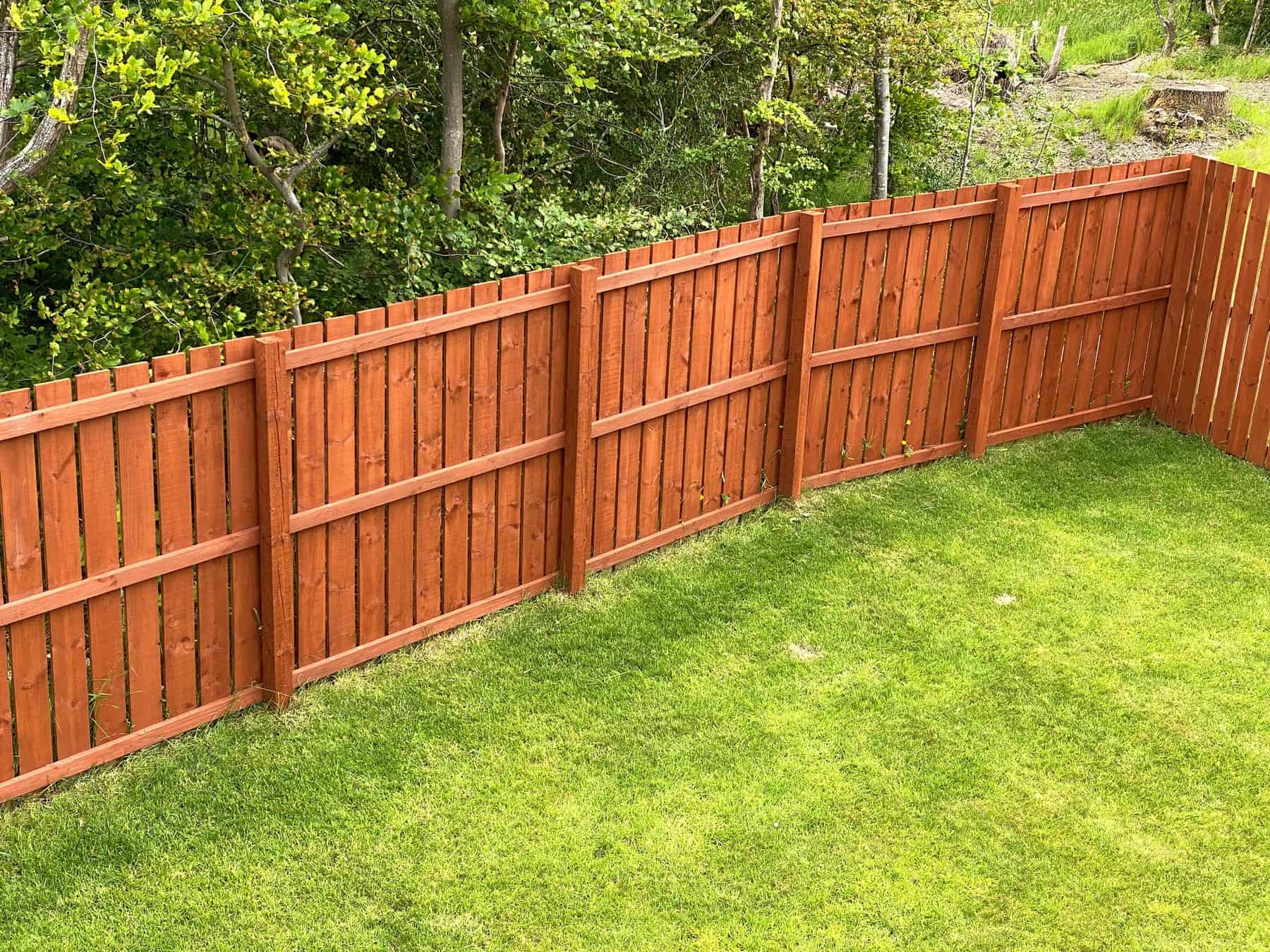
Why the Right Cedar Fence Stain Starts with the Wood Itself
Cedar is not just any fence material. It naturally contains oils that give it some resistance to decay and insect damage, which makes it a premium choice for outdoor fencing, but those same oils are exactly what make staining it tricky.
Some softwoods like cedar contain oils that can keep water-based stains from absorbing evenly. Using an oil-based stain avoids that issue and is generally the better choice for cedar fences.
Even with its natural resilience, cedar takes a beating over time. UV rays break down the wood’s lignin, deteriorating the surface and turning it gray, while moisture drives expansion and contraction cycles that create cracks, warping, and potential rot. Without intervention, even resilient cedar will weather significantly within the first year of exposure.
In Alameda, that process gets pushed along by the marine layer rolling in off the Bay. Morning fog, salt air, and cool damp winters are not ideal for unprotected wood. Getting the right stain on before damage accumulates is what separates a fence that stays beautiful for two decades from one that looks rough after three winters.
Oil-Based vs. Water-Based: Which Is the Best Stain for a Cedar Fence?
This is the core comparison most Alameda homeowners face at the paint store. Both have real advantages, so here is how they actually differ on cedar.
Oil-Based Stains
One of the main advantages of oil-based stains is how deeply they penetrate the wood, protecting it from within for a more robust, long-lasting defense against the elements.
They are especially effective against moisture, a critical factor for outdoor structures like fences. By embedding into the wood fibers, they create a barrier that keeps water from seeping in, reducing the risk of warping, cracking, and rot.
Oil-based stains also apply more transparently than water-based ones, so the grain stays visible, and the oil coats the wood evenly for a uniform finish with fewer visible lap marks.
The downsides: cleanup requires mineral spirits, drying can take up to 72 hours, and these formulations emit higher levels of volatile organic compounds. That last point matters more in California than almost anywhere else, since the state’s VOC rules are among the strictest in the country, with the California Air Resources Board (CARB) controlling emissions from many sources. Before buying any oil-based stain, confirm it is CARB-compliant, and for the federal baseline, the EPA’s architectural coatings fact sheet covers how VOC limits work, with California going further still.
Water-Based Stains
Water-based stains have evolved significantly, now offering performance that approaches or matches oil-based products in many applications. They dry faster, emit fewer VOCs, and clean up with soap and water.
In damp or coastal areas, water-repellent stains with added mildew resistance are critical, and many newer water-based formulas deliver on both. They also resist mold and mildew more effectively than oil-based options, partly because the faster drying means water is not trapped to cause decay.
The catch with cedar: its natural oils can repel water-based stains, leading to uneven absorption and a blotchy look. This is not universal, but it is common enough on fresh cedar to know before you commit, and thorough prep, cleaning and light sanding, significantly reduces the risk.
Which One Is Right for Alameda?
For brand-new cedar, an oil-based semi-transparent stain is usually the more reliable starting point because of how well it penetrates fresh, oil-rich wood, which is part of why oil-based is often the best stain for cedar fence on tannin-rich species like cedar and redwood. For a fence you are restaining, a high-quality water-based formula with mildew resistance can work well and sidesteps California VOC concerns more easily.
The right answer depends on your fence’s age, current condition, and how much direct sun it faces. For more on how oil and water-based formulas perform in Bay Area conditions, our post on oil versus latex exterior paint goes deeper on how each base handles local weather.
Stain Transparency Levels: What Each One Does to Your Cedar
Once you have settled on a base type, you have a second decision: how much of the wood grain do you want showing through?
Clear / Transparent Stains
A transparent stain highlights cedar’s natural grain and is best on new wood in spots with minimal UV or weather exposure. It lets the wood breathe and age naturally while adding a soft tint, but it offers the least UV protection and little barrier against moisture or fading.
Clear stains are reasonable for a new fence in a well-shaded spot, but plan to reapply within 1 to 2 years in a sun-exposed Alameda yard.
Semi-Transparent Stains
Semi-transparent stains strike a balance for homeowners who want to protect cedar while showing its natural beauty. They penetrate the surface, add color, and keep the grain visible, and because they come in oil- or water-based formulas, they combine some of the best features of both.
For most Alameda homeowners who want the warmth of cedar without burying the grain under a thick film, semi-transparent is the most popular choice, and for good reason.
Semi-Solid and Solid Stains
Semi-solid stains deepen the tone while still showing some texture, while solid stains create an even, paint-like finish that hides blemishes but keeps the wood texture visible.
Solid stains offer the most UV protection and last the longest. Transparent and semi-transparent finishes usually need recoating every 2 to 3 years, while solid stains may last 4 to 5 years before a new coat.
The trade-off: once you go solid, reverting to a natural look requires stripping the fence, a significant undertaking. Solid stains make the most sense on older, weathered cedar where imperfections have accumulated and you want to reset the look entirely.
What Alameda’s Climate Demands from Any Stain
Most stain advice online is written for Texas summers or midwest winters, but Alameda’s climate is its own thing. The mix of cool foggy mornings, strong afternoon sun, and salt air off the Bay creates specific demands that generic product recommendations do not account for.
In hot, sunny regions, formulas with strong UV blockers slow fading, and in damp or coastal areas, water-repellent stains with mildew resistance are critical. Alameda sits squarely in both categories.
You need UV protection because the East Bay afternoon sun is intense, especially on south- and west-facing fences, and you need real moisture resistance because the marine layer keeps humidity high through spring while winter rain damages unprotected wood. That dual demand is the heart of choosing the best stain for cedar fence here, since a product that handles one but not the other will not hold up.
This same dynamic is why exterior coatings in this region tend to fail faster than homeowners expect. If you are seeing similar problems on painted surfaces, our post on why exterior trim paint keeps failing explains exactly what is happening.
Prep: What Has to Happen Before Any Stain Goes On
The product you choose matters far less than whether the surface is ready to receive it. Skipping prep is the most common mistake that leads to premature stain failure.
Even new cedar carries a mill glaze, a smooth layer left from the sawing process, along with surface oils that block penetration. Fresh cedar should weather 4 to 12 weeks before staining so the pores open and the stain absorbs evenly. This timing is easy to skip when you are eager to finish, and it is one of the most consistent causes of early failure.
Common prep mistakes to avoid: staining wet wood, which traps moisture and leads to peeling or mold; skipping cleaning, which keeps the stain from bonding; and applying stain too thickly, which causes uneven drying and a blotchy look. A quick readiness check: sprinkle water on the surface, and if it beads up the wood is still too wet, while if it soaks in the stain will adhere better.
For previously stained cedar, clean off mildew, dirt, and surface degradation before any new product goes on, and lightly sand where the old stain has worn away so the new coat bonds uniformly. Getting prep right is what lets the best stain for cedar fence actually perform the way the label promises.
How Long Does a Good Stain Actually Last?
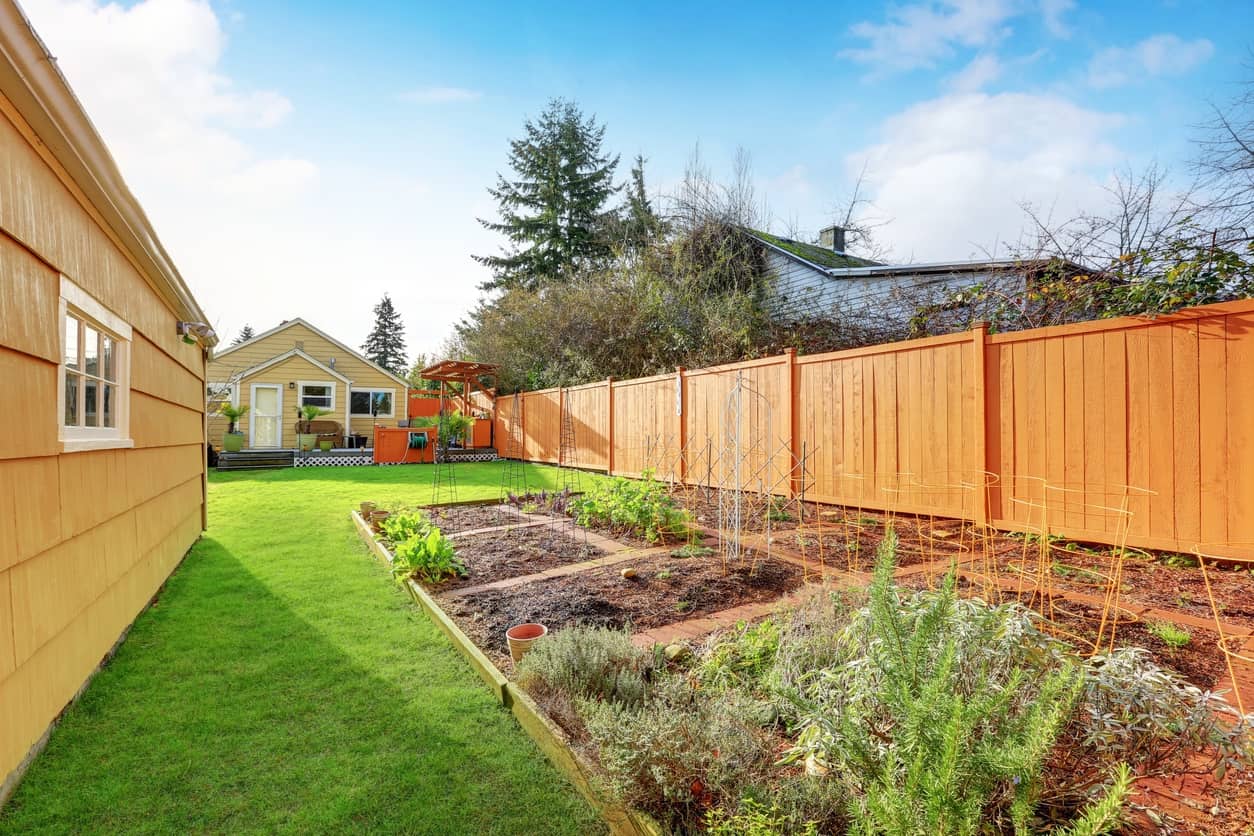
A stained cedar fence can last 25 to 30 years, compared to 15 to 20 years unstained, which over time reduces repair costs, replacement frequency, and maintenance headaches.
But that lifespan depends on recoating on schedule. Most stains need reapplication every 2 to 4 years depending on climate, sun exposure, and product quality.
Watch for color fading, water soaking into the surface rather than beading, or gray patches starting to appear. Those are your signals, and catching them early makes the next round of prep much simpler. For habits that stretch exterior coating life under California’s sun, our post on how to make exterior paint last longer applies directly to stained cedar as well.
When Professional Application Makes a Real Difference
Some homeowners stain their own fences and get solid results, but application technique affects longevity more than most people expect. Roller application, or spray with back-brushing, is the quickest way to a uniform finish, and you should avoid staining in direct sunlight to prevent lap marks. Maintaining a wet edge for continuous lengths, stopping only at natural breaks, produces the best outcome.
With a fence the length of a typical Alameda yard, holding that wet-edge discipline on your own is genuinely hard. One section dries while you are moving a ladder, and you end up with a visible seam. Professionals who work on exterior wood regularly know the rhythm that prevents this, and they have worked through enough Bay Area seasons to know when conditions are right and when to wait.
Arana Craftsman Painters is a family-owned company recognized on Nextdoor and Houzz, and carries a Best of Oakland designation. That track record reflects work on exactly the kind of exterior projects where preparation and technique decide whether a job holds up for years or needs redoing quickly, and all workmanship comes backed by a warranty.
Making the Right Call for Your Alameda Cedar Fence
There is no single answer that fits every yard. The best stain for cedar fence in Alameda depends on how old the wood is, how much sun it gets, whether mildew has already taken hold, and what look you want to keep or change.
Oil-based semi-transparent stains perform well on fresh cedar in this climate, while water-based formulas with mildew inhibitors work reliably on previously treated wood. In every case, prep determines whether the product you choose reaches its full potential or falls short.
If you would rather have someone who knows Bay Area exteriors handle the product selection, prep, and application, Arana Craftsman Painters will take a look at what your cedar fence actually needs and give you a straight answer on the right path forward. Call 510-405-3279 for a FREE estimate today.