
You hired a painter 4 years ago. The work looked great at first. Then the peeling started, right along the window trim, across the south-facing siding, around the front door. By year 5, it looked like the project never happened.
Paint failure like that rarely comes down to just 1 thing. But one of the most overlooked causes is using the wrong paint type for the surface and the climate it has to survive in. In the Bay Area, that mistake happens more than most homeowners realize.
This is a breakdown of how oil and latex exterior paint actually behave, where each one belongs, and why the choice matters more in this region than almost anywhere else in California.
Key Takeaways
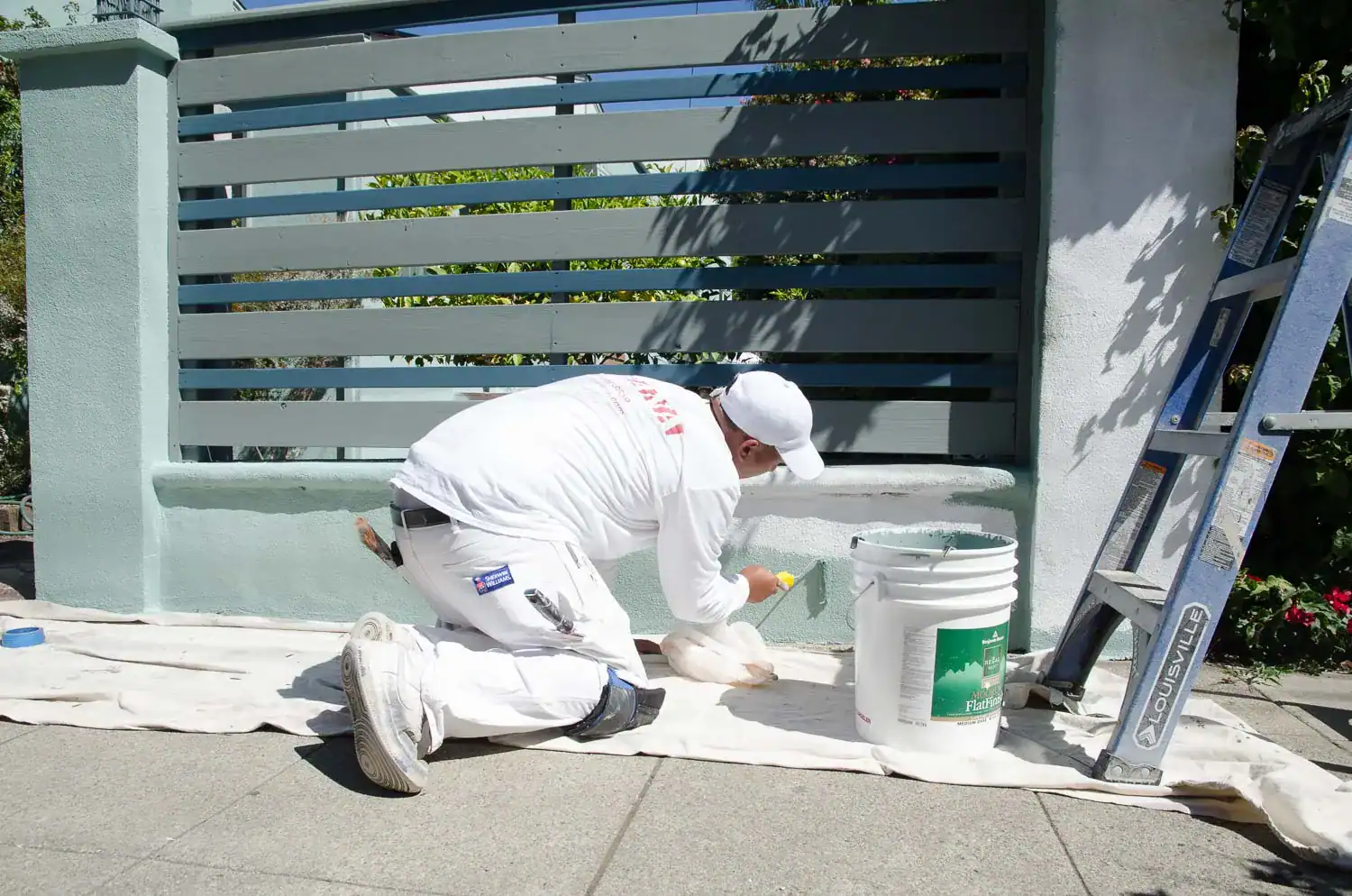
Oil and Latex Are Not the Same Product in Different Packaging
Most homeowners treat oil and latex as 2 versions of the same thing, like regular and premium at a gas station. They’re not. They’re built differently, dry differently, and break down differently over time.
Oil-based paint uses an alkyd or petroleum-based carrier. It cures through oxidation, a chemical reaction with air that hardens the film slowly over 24-48 hours between coats. The result is a dense, hard surface that penetrates deeply into porous materials.
Latex paint, specifically 100% acrylic latex, uses water as its carrier. It dries through evaporation, typically within 4-6 hours, and cures into a flexible film that can move with the surface underneath it. That flexibility is the core reason latex has become the dominant product for exterior projects across most of the country.
What the Bay Area’s Climate Does to Exterior Paint
Here’s what your home’s exterior deals with in a single year: marine layer moisture from June through August, direct UV exposure when the fog burns off, rain from November through April, and temperature swings between neighborhoods that can be 15-20 degrees different on the same afternoon.
Sausalito and Walnut Creek are 20 miles apart. Their exteriors age completely differently. That’s what microclimates do to paint.
A coating that can’t flex through those shifts will start showing stress fractures, usually at joints, trim edges, and anywhere 2 surfaces meet. Oil-based topcoats are rigid by design. In a stable climate, that rigidity is fine. In the Bay Area, it works against you.
The Old Home Problem
A large portion of Bay Area homes, particularly in Oakland, Berkeley, and Alameda, were built before 1950. Many were built before 1978. That matters because homes built before 1978 are likely to have layers of lead-based paint underneath whatever is on the surface now.
The EPA’s Renovation, Repair and Painting Program sets out requirements for how contractors must handle surfaces with potential lead paint, including how prep work is done, how dust is contained, and how waste is disposed of. Any painter working on a pre-1978 home in Oakland or Berkeley should be certified under this program.
The paint type you choose also intersects with this. Proper surface prep on older homes often involves oil-based primers to seal bare wood or heavily weathered areas before a latex topcoat goes on. Skipping that step, or using the wrong primer for the substrate, is one of the reasons paint fails faster than it should on older Bay Area architecture.
Where Oil Still Belongs in an Exterior Project
Saying latex is better for most exterior surfaces is not the same as saying oil has no place in the project. Experienced painters still reach for oil-based products in specific situations, and getting this right is part of what separates a 4-year finish from a 10-year one.
Oil-based products make sense for:
- Bare wood that needs deep penetration before a latex topcoat
- Metal surfaces like decorative iron, railings, and wrought iron gates
- Areas with heavy tannin bleed or staining that water-based primers can’t fully seal
- Repainting over existing oil-based paint that hasn’t been fully stripped
In most of these cases, oil is used in the prep stage, not as the final coat. The combination of an oil-based primer with a quality latex topcoat is a common approach on Bay Area Craftsman bungalows and Victorian homes, where bare wood exposure and old surface layers are both in play.
What 100% Acrylic Latex Actually Does Better
For full exterior topcoats on wood siding, stucco, fiber cement, and shingles, 100% acrylic latex outperforms oil-based paint in 3 measurable ways.
First, flexibility. Latex film moves with the surface as it expands and contracts through temperature and humidity shifts. Oil-based film does not. In a climate with daily moisture cycling, that flexibility is what keeps paint from cracking at stress points.
Second, color retention. Oil-based paint yellows under UV exposure over time, particularly on white and light-toned exteriors. According to the American Coatings Association, modern acrylic latex formulations hold color significantly longer under UV exposure than oil-based alternatives, which matters on south and west-facing elevations that take direct sun most of the day.
Third, moisture resistance. Latex allows the surface underneath to breathe, releasing trapped moisture rather than sealing it in. On Bay Area exteriors that absorb fog regularly, that breathability reduces the risk of blistering and peeling from the inside out.
Sherwin-Williams exterior latex lines are formulated with these conditions in mind, and it’s the kind of product choice that exterior house painters in the Bay Area factor in before recommending a product for a specific home.
The VOC Factor in California
California has some of the strictest VOC regulations in the country, and oil-based paints sit well above the thresholds set by the California Air Resources Board for many product categories. This is not just an environmental concern. High-VOC products affect air quality for the people living in the home during and after the project.
Latex paints, particularly low-VOC and zero-VOC acrylic formulas, have addressed this gap significantly. For homeowners thinking about what they’re putting on and near their home, this is part of why sustainable painting choices have moved from a niche preference to a practical standard in this market. The post on sustainable painting practices for Bay Area homes goes deeper on how these formulations have changed and what that means for long-term home health.
How to Think About This Decision for Your Home
The surface-by-surface answer looks like this:
- Wood siding and trim: 100% acrylic latex topcoat, oil primer on bare areas
- Stucco: 100% acrylic latex, elastomeric options for cracked surfaces
- Fiber cement: 100% acrylic latex
- Metal surfaces: oil-based primer, latex or oil topcoat depending on exposure
- Shingles and wood siding: acrylic latex or a quality stain product
One thing worth knowing before you finalize your color is that oil and latex cure and dry differently, which affects how the final color looks on the wall. This breakdown of how paint dries on exterior surfaces is a useful read before committing to anything.
Get a Straight Answer from a Local Painter
The right product recommendation comes from someone who has seen how paint behaves on Bay Area homes across different neighborhoods, microclimates, and architectural styles. That’s not something a paint store associate can give you.
Arana Craftsman Painters has completed 4,000+ exterior projects across Oakland and surrounding Bay Area communities since 2004, working on everything from Victorian mansions in Berkeley to mid-century moderns in Lafayette. Every project comes with a 5-year warranty and yearly check-ins.
Schedule your free estimate and get a product recommendation based on what your home’s exterior actually needs.